
Project Report
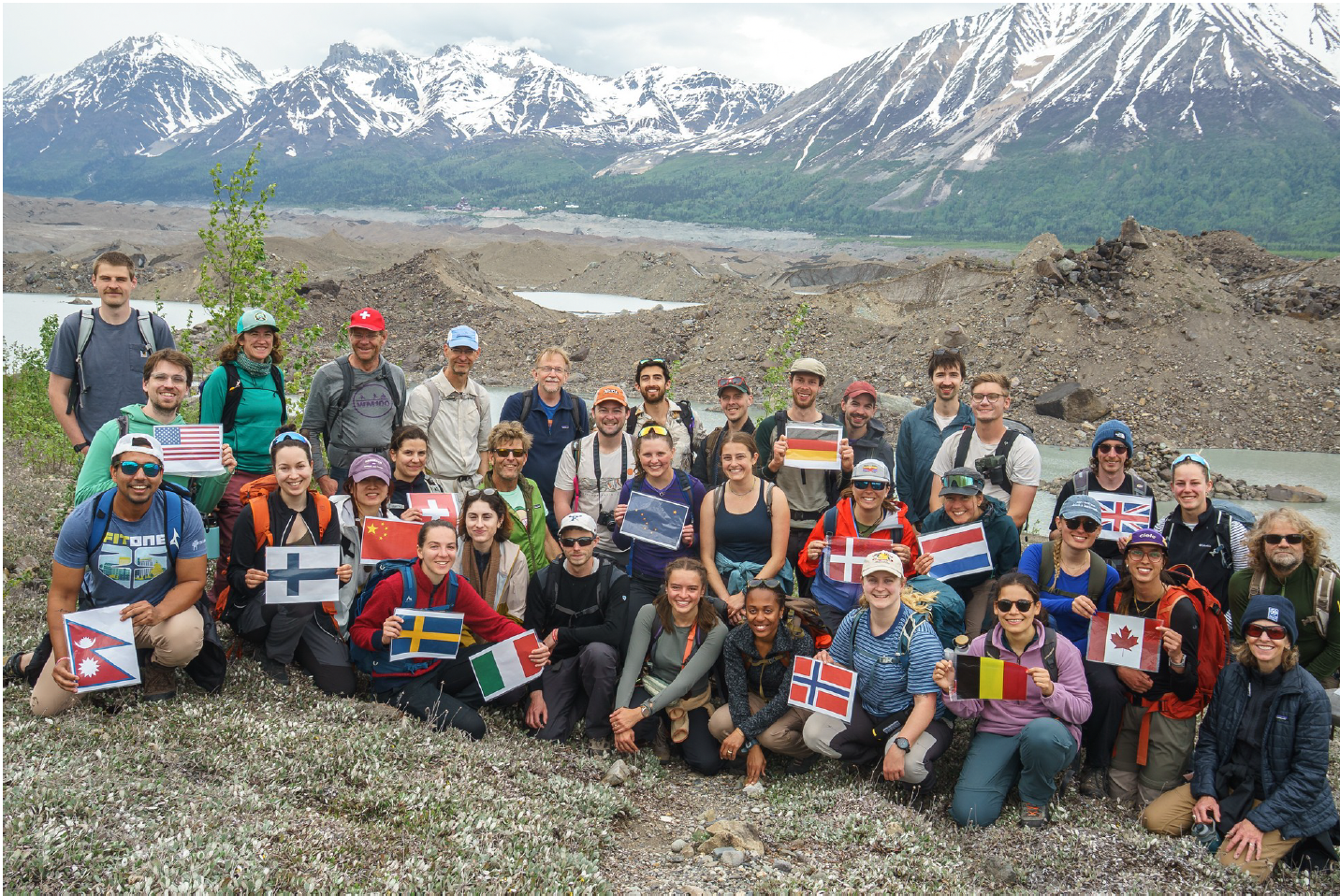
From June 6–16, 2026, twenty-eight graduate students from more than ten countries gathered in the small Alaskan village of McCarthy to attend the University of Alaska Fairbanks (UAF) 11-day International Summer School in Glaciology. Now in its eighth edition, the course was set against the backdrop of heavily glacierized mountains—an ideal environment for training early-career PhD students to address the growing challenges of quantifying and modeling the rapid changes in glaciers and ice sheets under global warming. A key objective was also to foster collaboration among students and between students and established scientists in glaciology.
Five instructors from the UAF glaciology group, joined by one instructor from another U.S. institution and one from a Canadian university, remained on site for the full duration of the program, ensuring extensive opportunities for interaction beyond formal teaching sessions and class projects.
Students engaged in lectures, exercises, and computer-based projects focused on Arctic glaciology with special emphasis on the interactions between glaciers/ice sheets and the atmosphere and the oceans. Students presented their own research in an outdoor poster session, with posters displayed on the walls of the Wrangell Mountain Center and on improvised laundry lines. Excursions to nearby glaciers provided hands-on experience in a high-latitude glacier environment—an especially memorable highlight for the eight students who, despite studying glaciers, had never previously set foot on one. Evening activities rounded out the program, including a public lecture that attracted more than fifty local residents, tour guides, and tourists. On the final day, students presented the results of their projects, impressing participants and instructors alike with the amount and quality of work accomplished in just a few days.
The course received very positive evaluations. The graduate students left with a stronger grounding in glaciology and an expanded international professional network. As in previous years, the summer school depended substantially on support from international organizations, with IASC among the professional bodies providing essential financial contributions without which the summer school would simply be impossible to carry out in an affordable manner to most students.
Highlights
- Students substantially deepened their glaciological literacy, building a broad knowledge base that extended well beyond their individual thesis topics.
- The mix of complementary teaching formats—including lectures, exercises, research projects, and student presentations—resulted in an effective and engaging learning experience.
- Students established personal and professional networks with glaciologists from multiple countries and career stages, laying the groundwork for future collaboration and ongoing interactions.
Date and Location
6 – 16 June 2026, McCarthy, Alaska, USA
IASC Working Groups funding the project
- Atmosphere WG
- Cryosphere WG
- Marine WG
Project Lead
Martin Truffer (University of Alaska Fairbanks, Alaska, USA)
Year funded by IASC
2026